
How to Manage Back Pain at Work
Simple, practical ways to reduce strain and move more comfortably through your workday.
Read article →Why a measured return-to-sport plan matters for confidence, capacity and performance.
 Sports
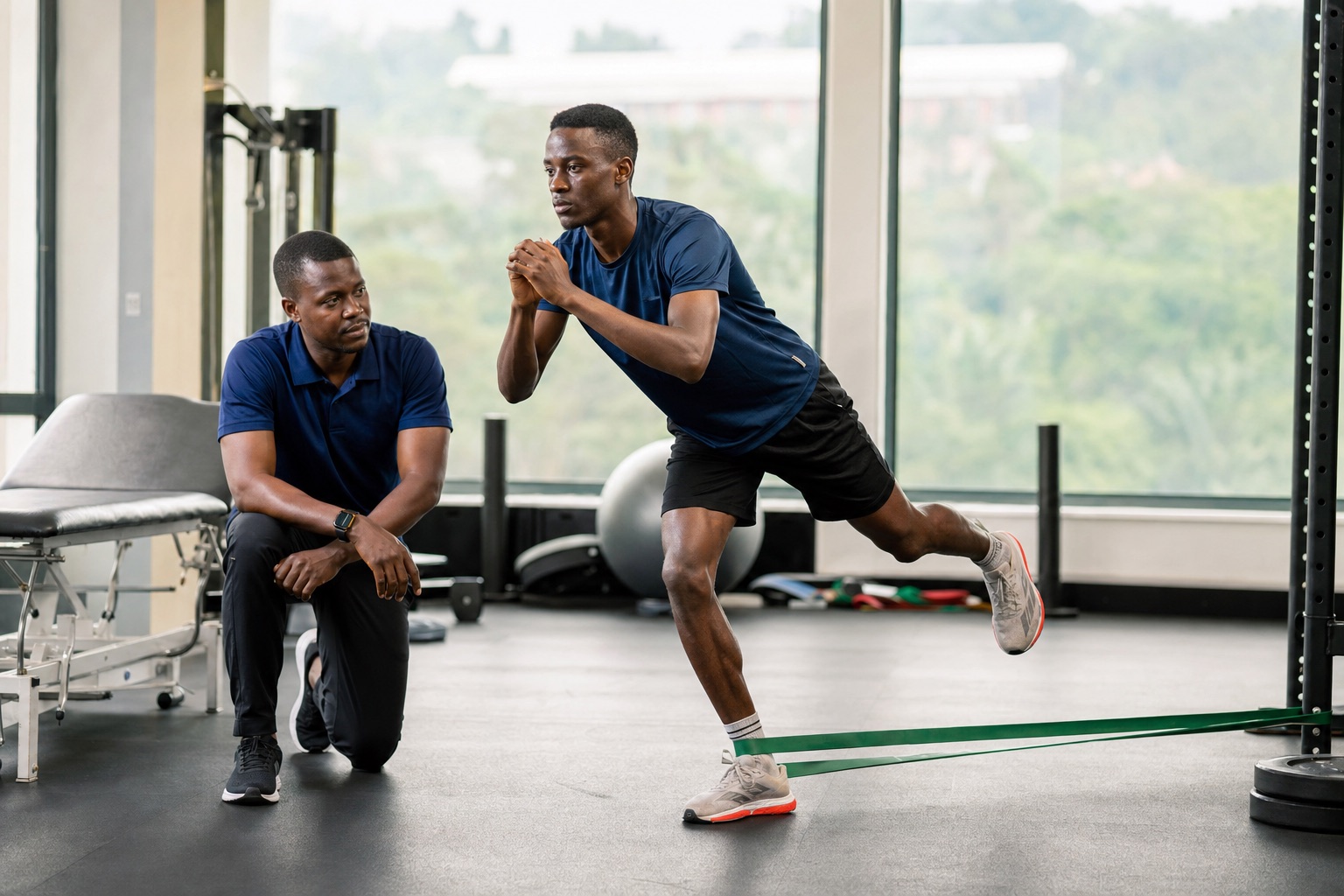
A sports injury can affect more than the painful area. Time away from training may change strength, movement control, fitness and confidence, while the athlete may also feel pressure to return quickly. Good rehabilitation considers the whole person and the demands of the sport, not only whether pain has reduced.
The first step is a clear assessment. A physiotherapist will ask how the injury happened, examine movement and function, and consider any previous injuries or training changes. This helps identify what is safe to begin now and what needs to be rebuilt before higher-level activity is introduced.
Rehabilitation usually progresses from restoring comfortable movement to developing strength, balance, control and the ability to tolerate repeated load. Progress is guided by how the body responds rather than by the calendar alone. Some discomfort may occur during recovery, but symptoms should be monitored and the programme adjusted when the response is excessive or does not settle as expected.
As capacity improves, exercises should begin to resemble the real demands of the athlete's sport. Running, jumping, landing, changing direction or handling contact may need to be reintroduced in stages. Training in a controlled environment allows the athlete and clinician to observe movement quality before intensity and unpredictability increase.
Confidence is part of recovery. An athlete may be physically stronger but still hesitate during a movement associated with the injury. Practising sport-specific tasks, reviewing progress and understanding why each stage is included can help rebuild trust in the body without rushing the process.
Return to sport is best treated as a progression from rehabilitation to modified training and then full participation. Decisions should reflect symptoms, function, sport-specific testing, training response and the athlete's own confidence, with clear communication between the athlete, physiotherapist and coaching team.
Article information is general and cannot replace an individual clinical assessment.
Book an Appointment Workplace Health
Simple, practical ways to reduce strain and move more comfortably through your workday.
Read article → Patient Guide
A clear guide to symptoms, movement problems and recovery concerns that deserve attention.
Read article → Spine Health
Common contributors to neck discomfort and when an assessment may help.
Read article →